ePORTFOLIO
MRTQ PDN | Technical Assistant Credential
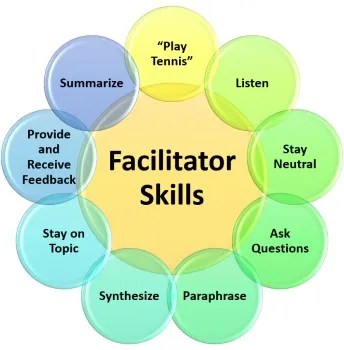
Facilitation Strategies
Facilitate: verb –
make (an action or process) easy or easier.
Dealing with Difficult Behaviors



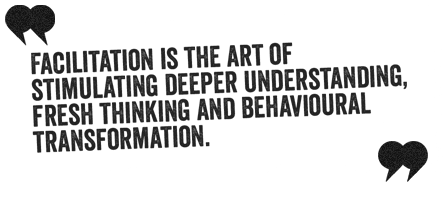
Facilitation Dilemmas
Managing Difficult Situations – Process Interventions
Levels of Intervention (from least to most intrusive)
Level 1 – Do Nothing: Make a clear decision to take no action. Your non-action can raise the tension and discomfort level – this will often cause the group to take action. This allows the group to act independently and take ownership in handling its own dilemmas. Allows time for facilitator to “go to the balcony” and consider the next level of intervention.
Level 2 – Present Your Observations: Describe, simply and in concrete terms, what you are observing, without judgment. Use openers such as “I noticed that” or “I observed that.” Once you make the observation the intervention is over. The group may ignore the comment or change the behavior. No further judgment or explanation is given. If the group asks for assistance, the facilitator determines how best to proceed.
Level 3 – Describe how You Are Feeling: Describe how the behavior(s) in question are affecting your ability to facilitate the group. Be careful not to project your feelings on the group or make assumptions about how group members are impacted. Use “I” statements such as ” I am uncomfortable about” or “I feel frustrated because” or “I am confused about.” this is to help group members understand the impact of their behaviors and move them to change and monitor the behaviors.
Level 4 – Ask For Help: State what you observe and the impact that it is having on the group and on the intended objectives. Ask the group for assistance or clarification regarding content or process. Engage group members in a perception check. Agree on next steps based on the collective response to the request for assistance.
Level 5 – Direct The Process (Strong Action): This is the most risky intervention strategy. Facilitator imposes the direction the group needs to take and suggests a structure. May need to conduct a mini-teach on a specific strategy.
__________________________________________________________
Intervention Wisdom
Try not to intervene too quickly.
Monitor your feelings about conflict. Tension and discomfort are normal and necessary for learning to occur.
Monitor your personal feelings and perceptions about the situation and/or participant(s).
Go to the balcony and act as an observer, not an “engager.”
Monitor your need to be seen as the “expert.”
When you state an observation be sure it is non-judgmental. Example “I have noticed that only 2 group members have spoken during our time together” rather than Why are most of you not engaging and participating?”
Consider how your own behavior may have contributed to the problem. Example “Perhaps the way I state the instructions was unclear, let me try again.”
Intervening at level 5 is a rare event. Moving to this level too quickly or too frequently will cause distrust and disengagement in the group. __________________________________________________________
Resources Garmston, R.J. & Wellman, B. (1999), The Adaptive School: A Sourcebook for Developing Collaborative Groups. Norwood, MA: Christopher-Gordon Publishers, Inc. Garmston, R. (1997). the Presenter’s Fieldbook: A Practical Guide. Norwood, MA: Christopher-Gordon Publishers, Inc. Killion, J. (Winter 1999). Knowing When and How Much to Steer the Ship. Journal of Staff Development.
__________________________________________________________
 ePORTFOLIO